The Enduring Appeal of a Discontinued Classic
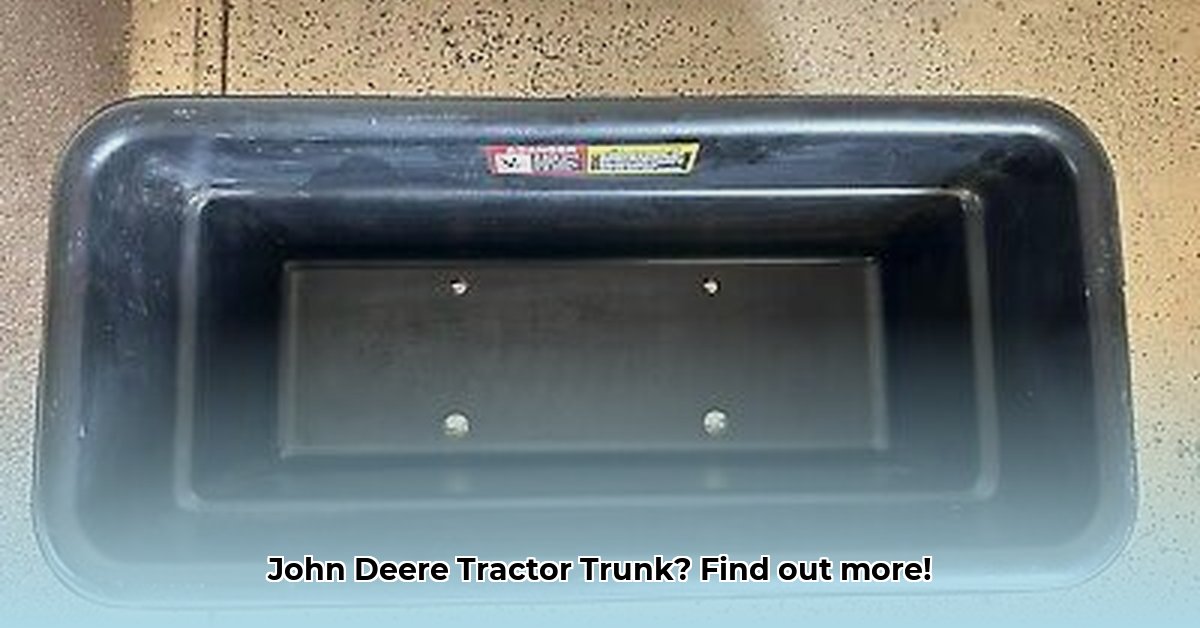
The John Deere tractor trunk: a seemingly simple accessory that's become a legend among farmers. Discontinued by John Deere around 2006, these robust storage boxes are now highly sought-after, commanding premium prices on the secondary market. But why the enduring appeal? This guide explores the reasons behind the fervent search for these rare trunks, examines available alternatives, and provides insights into the current market. For more detailed information, check out this helpful resource.
User Reviews & Experiences: A Testament to Practicality
Online agricultural forums paint a clear picture: the John Deere tractor trunk isn't just storage; it's a valued tool. Farmers consistently praise its practicality across various applications.
Organized Tool Storage: Many users emphasize the trunk's ability to neatly organize tools, eliminating the frustrating search for the right wrench mid-job. "My John Deere trunk keeps my wrenches, sockets, and other small tools perfectly organized. No more fumbling around for the right tool in the middle of a job!" – A Nebraska Farmer
Enhanced Tool Protection: The enclosed design protects valuable tools from the elements. "I use mine to store my more expensive tools, protecting them from the elements. It’s like a mini-safe for my hand tools." – An Iowa Farmhand
Efficient Waste Management: The trunk serves as a convenient receptacle for debris and small parts during field work, streamlining cleanup. "I use it to collect debris and small parts – makes cleanup a breeze!" – A Kansas Farmer
Unexpected Versatility: Some farmers showcase creative adaptations, such as modifying their trunk to support additional equipment. "I’ve even mounted a small sprayer to mine; it's surprisingly sturdy!" – An Illinois Farmer
These testimonials highlight the compelling versatility and durability of the John Deere tractor trunk, explaining its continued desirability. Is it any wonder these trunks have achieved almost mythical status among farmers?
Technical Specifications & Comparison to Modern Equivalents
Precise technical specifications for the John Deere tractor trunk (often cited as model BM19210) remain elusive. Commonly mentioned is an approximate capacity of 2 cubic feet. However, variations likely existed across production runs. The construction is consistently praised for its resilience and weather resistance. Finding direct, modern equivalents with comparable features proves challenging, further fueling demand for the original. Many aftermarket options lack the secure, enclosed storage that makes the John Deere trunk so desirable.
Availability and Market Analysis: The High-Stakes Hunt
Finding a new John Deere tractor trunk is virtually impossible. The only reliable source is the secondary market, primarily online auction sites and used equipment marketplaces. Buyers should anticipate vigorous competition and potentially inflated prices reflecting the limited availability. The scarcity contributes significantly to the high demand and the premium prices often associated with these trunks.
Alternatives and Future Implications: Meeting Unmet Needs
The continued high demand offers a clear opportunity for aftermarket manufacturers to produce comparable alternatives. A modern interpretation incorporating updated materials and potentially improved features (such as enhanced sealing or increased capacity) could meet the existing needs of the market. Further, John Deere themselves may reconsider production if market analysis reveals sufficient demand and identify opportunities for innovation.
Conclusion: A Legacy of Durability and Practicality
The discontinued John Deere tractor trunk remains a highly sought-after item in the agricultural community. Its enduring appeal is rooted in its simple but effective design, robust construction, and versatility. While acquiring an original trunk might require patience and persistence, it stands as a testament to the enduring value of time-tested, practical tools. The hunt for the ideal storage solution continues, and the John Deere trunk serves as the yardstick against which all alternatives are measured.